
Step-by-Step Guide to Resolving Back Taxes and IRS Notices in Florida
Ignoring IRS notices is a common mistake that can lead to severe financial penalties and aggressive collection actions. According to recent IRS data, the agency has been increasingly focused on closing the tax gap, which means unfiled returns and unpaid taxes are being identified faster than ever before. For residents in Plantation, FL, and across the state, understanding how to respond to these notices is critical to protecting your assets and restoring your financial health. This guide outlines the precise steps to resolve back taxes and handle IRS correspondence effectively. (Tax Preparation amp IRS)
Understanding IRS Notices and Letters
The first step in resolving back taxes is understanding the specific notice you have received. The IRS sends various types of notices, each requiring a different response. Common notices include CP14, which indicates a balance due, and CP501, which is a first notice of balance due. More serious notices, such as CP503 or CP504, are follow-ups that indicate the IRS is preparing to take collection action. (Blog Quality Taxes and)
It is crucial to read the notice carefully. The IRS will specify the amount owed, the tax period involved, and the deadline for response. Ignoring these notices does not make the debt disappear. Instead, it triggers a series of automated penalties and interest accruals. In Florida, where property and income taxes are significant, the cumulative effect of IRS penalties can quickly become unmanageable for individuals and business owners alike.
If you are unsure what a notice means, do not guess. Contacting a tax professional can clarify the situation and prevent costly errors in your response. For more information on how to handle specific notices, you can visit the IRS Notices and Letters page.
Immediate Actions to Take
Upon receiving an IRS notice, time is of the essence. The following steps should be taken immediately to mitigate further damage to your financial standing.
1. Verify the Notice Authenticity
Scammers often impersonate the IRS to collect money from unsuspecting victims. Always verify the legitimacy of the notice. The IRS typically sends notices via mail, not email or phone. Check the notice for an official IRS seal and a valid case number. You can verify the notice by calling the number provided on the document or visiting the IRS Fraud Reporting page if you suspect it is fake.
2. Gather Relevant Documentation
Collect all tax returns, W-2s, 1099s, and previous correspondence related to the tax years in question. If you have not filed returns for those years, you will need to prepare them before proceeding. Unfiled returns are often the root cause of IRS notices, and filing them is the first step toward resolution.
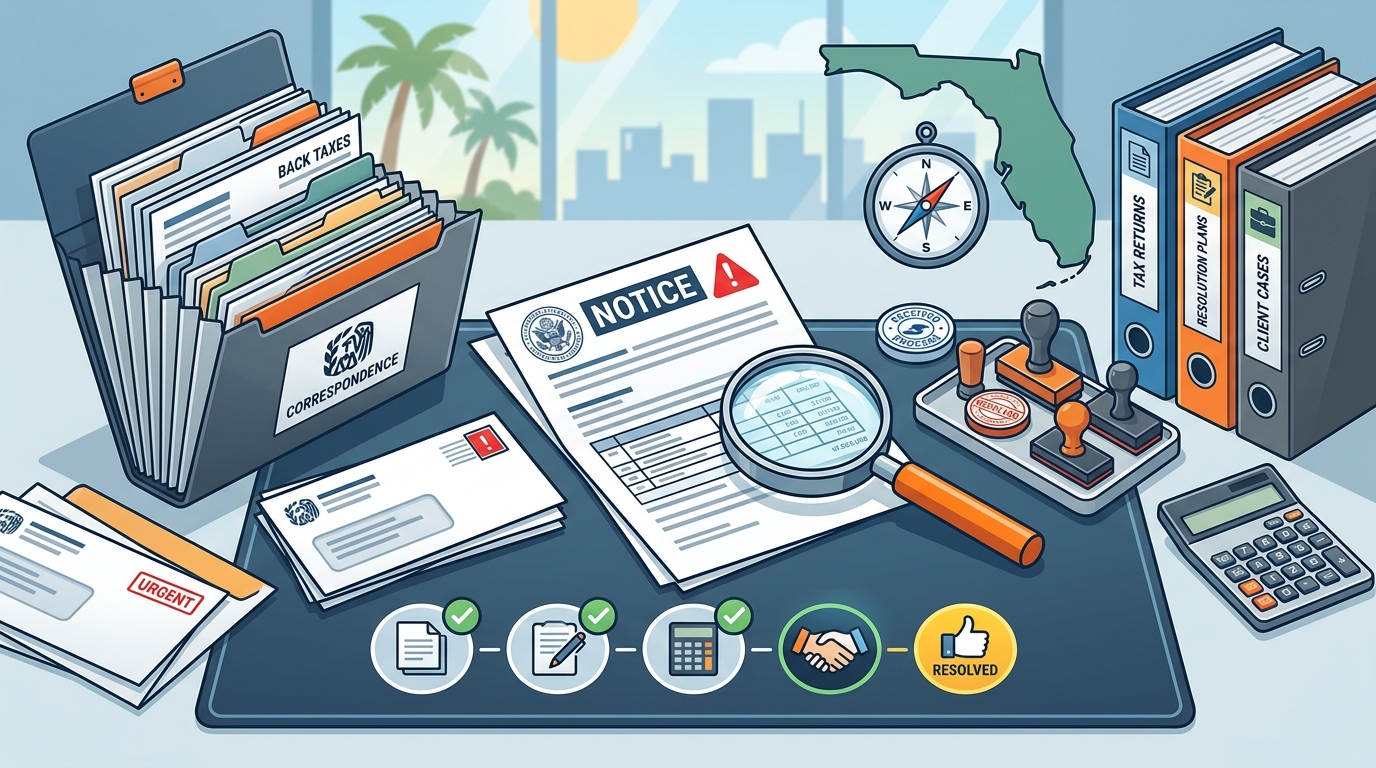
3. Calculate the Total Debt
Use the IRS calculator or consult with a tax professional to determine the exact amount owed, including penalties and interest. Understanding the full scope of the debt allows you to explore realistic payment options. For detailed guidance on calculating your tax debt, refer to the IRS guide on understanding notices.
Resolution Options for Back Taxes
Once you have verified the debt and gathered documentation, you can explore resolution options. The IRS offers several pathways to resolve back taxes, depending on your financial situation and the amount owed.
Installment Agreements
An installment agreement allows you to pay your tax debt over time. If you owe less than $50,000, you may qualify for a streamlined installment agreement, which requires less financial disclosure. For larger amounts, a more detailed financial statement may be required. This option is ideal for those who can pay the debt in full but need more time to do so.
Partial Payment Installment Agreement
If you cannot afford to pay the full amount, a partial payment installment agreement may be an option. This allows you to pay a portion of the debt over time, with the remaining balance potentially being forgiven after the collection statute expires. This is a complex process that requires careful financial analysis.
Offer in Compromise
An Offer in Compromise (OIC) allows you to settle your tax debt for less than the full amount owed. This option is available only if you can demonstrate that paying the full amount would cause financial hardship. The IRS evaluates your income, expenses, and asset equity to determine if the offer is acceptable. According to IRS data, only a small percentage of OIC applications are approved, so it is essential to have accurate financial documentation.
Penalty Abatement
If you have a reasonable cause for not filing or paying on time, you may request penalty abatement. Common reasons include serious illness, natural disasters, or unavoidable delays. The IRS considers each request on a case-by-case basis. For more information on penalty relief, visit the IRS Penalty Relief page.
Setting Up Payment Plans and Offers
Setting up a payment plan or offer in compromise requires careful planning and accurate financial reporting. The IRS uses Form 433-F for individuals and Form 433-A for businesses to assess your ability to pay. Providing incomplete or inaccurate information can result in the rejection of your application.
When applying for a payment plan, be realistic about your monthly budget. The IRS will review your income and expenses to ensure the proposed payment is feasible. If you cannot afford the minimum payment, you may need to adjust your budget or consider other resolution options.
For those in Florida, especially in areas like Plantation, Miami, and Orlando, local tax professionals can help navigate the complexities of IRS payment plans. They can ensure that your financial statements are prepared correctly and that you are presenting your case in the best possible light.
When to Seek Professional Help
While it is possible to resolve back taxes on your own, the process can be daunting and error-prone. Professional help is recommended in the following scenarios:
- You have not filed tax returns for multiple years.
- You are facing an IRS audit or investigation.
- You owe a significant amount of back taxes and penalties.
- You are considering an Offer in Compromise.
- You are unsure how to respond to an IRS notice.
At Quality Taxes and Multiservices, we specialize in helping clients resolve back taxes and handle IRS notices. Our team of experts understands the nuances of IRS procedures and can provide personalized strategies to achieve the best possible outcome. We serve clients in Plantation, FL, and across the United States, including New Jersey, Georgia, Texas, North Carolina, and South Carolina.
For more information on our back taxes resolution services, visit our Back Taxes Resolution Services page.
Key Takeaways
- Act Immediately: Ignoring IRS notices leads to increased penalties and interest.
- Verify Notices: Always confirm the authenticity of IRS correspondence to avoid scams.
- Gather Documents: Collect all relevant tax records before contacting the IRS.
- Explore Options: Consider installment agreements, penalty abatement, or offers in compromise.
- Seek Help: Professional assistance can simplify the resolution process and improve outcomes.
- File Unfiled Returns: Failing to file is a serious offense that must be addressed promptly.
- Know Your Rights: The IRS has specific procedures for collection, and you have the right to appeal.
Frequently Asked Questions
What is the first step if I receive an IRS notice?
The first step is to read the notice carefully and verify its authenticity. Do not ignore it, as this can lead to further penalties and collection actions.
Can I resolve back taxes without filing my returns?
No, you must file your unfiled returns before you can resolve any back tax debt. The IRS requires accurate tax returns to determine the amount owed.
What is an Offer in Compromise?
An Offer in Compromise is a program that allows taxpayers to settle their tax debt for less than the full amount owed if they can demonstrate financial hardship.
How long does it take to resolve back taxes?
The timeline varies depending on the complexity of the case and the resolution option chosen. Simple installment agreements can be set up quickly, while Offers in Compromise may take several months to process.
Does Quality Taxes serve clients outside of Florida?
Yes, we provide tax preparation and IRS relief services to clients in New Jersey, Georgia, Texas, North Carolina, and South Carolina, in addition to Florida.
What are the penalties for not filing taxes?
The failure-to-file penalty is typically 5% of the unpaid taxes for each month or part of a month that a return is late. The failure-to-pay penalty is 0.5% of the unpaid taxes for each month.
Can I negotiate with the IRS directly?
Yes, you can negotiate directly with the IRS, but it is often more effective to work with a tax professional who understands the negotiation process and can advocate on your behalf.
Contact Quality Taxes for Assistance
Resolving back taxes and IRS notices requires expertise and attention to detail. At Quality Taxes and Multiservices, we provide comprehensive tax preparation, IRS relief, and financial planning services to help you achieve financial stability. Whether you are in Plantation, FL, or anywhere else in our service areas, we are here to help.
Do not let back taxes control your financial future. Contact us today to schedule a consultation and take the first step toward resolving your tax issues. Visit our Services page to learn more about how we can assist you.