

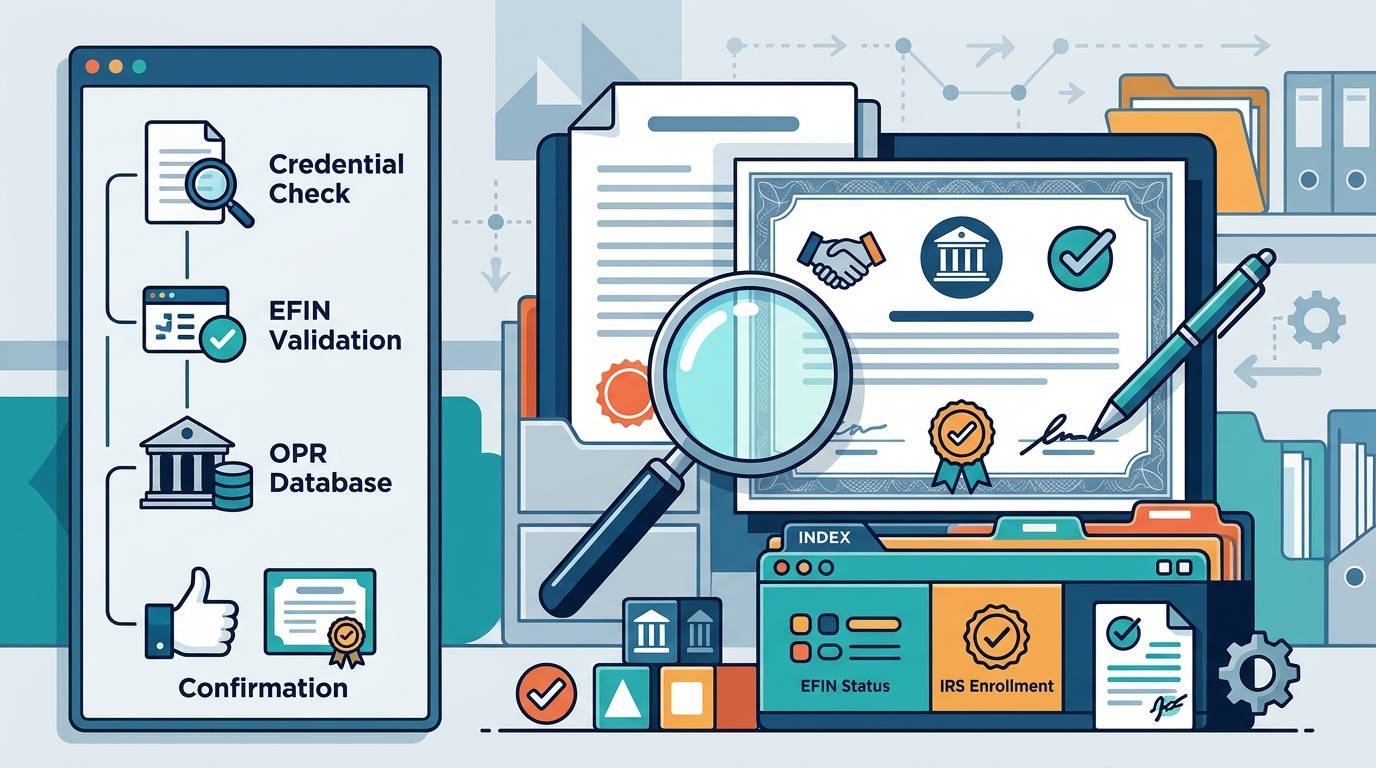
Verify a tax preparer's credentials by checking their Electronic Filing Identification Number (EFIN) status and confirming their enrollment with the IRS. You can validate these details through the IRS Office of Professional Responsibility (OPR) database. This process ensures the individual is authorized to represent you before the IRS and has not faced disciplinary action.
Check the IRS OPR Database
The most direct way to verify a preparer is to search the IRS Office of Professional Responsibility (OPR) database. This public tool lists all enrolled agents, certified public accountants (CPAs), and attorneys authorized to practice before the IRS. If a preparer claims to be an enrolled agent, their name and PTIN (Preparer Tax Identification Number) must appear in this registry. A missing name indicates the credential is invalid or expired.
For example, if a preparer provides a PTIN, you can enter it into the OPR search tool to confirm their active status. This step is critical because unauthorized individuals cannot legally represent taxpayers in IRS audits or appeals. The database is updated regularly, so a check performed today reflects the current standing of the professional.
Understand the Difference Between Credentials
Not all tax professionals hold the same level of authority. A tax preparer is an individual who prepares tax returns for compensation, but they may not be authorized to represent you before the IRS. In contrast, an enrolled agent is a federally qualified tax practitioner who has passed a comprehensive IRS examination. Understanding this distinction helps you choose the right level of representation for your specific needs.
CPAs and attorneys also hold specific credentials that allow them to practice before the IRS. However, a preparer with only an EFIN is limited to preparing returns and cannot represent you in an audit. If your situation involves complex disputes or prior-year issues, you need a professional with representation rights. Quality Taxes and Multiservices provides guidance on these distinctions to help clients select the appropriate level of support.
Validate the EFIN and PTIN
Every individual who prepares tax returns for compensation must obtain an Electronic Filing Identification Number (EFIN). This number is required to e-file returns with the IRS. You can ask a preparer for their EFIN and PTIN to verify their identity. The PTIN is a unique identifier assigned to the preparer, while the EFIN confirms their authorization to e-file.
While the EFIN itself is not always publicly searchable in the same way as OPR credentials, the preparer should be transparent about providing it. If a preparer refuses to share their PTIN or EFIN, this is a significant red flag. Legitimate professionals understand the importance of transparency and will provide these numbers without hesitation. This verification step protects you from working with an unregistered or fraudulent individual.
Review Disciplinary History
Checking a preparer's disciplinary history is a crucial part of the verification process. The IRS OPR database includes information about any disciplinary actions taken against a professional, such as suspensions or revocations of their practice rights. A clean record indicates a professional who adheres to ethical standards and IRS regulations. If a preparer has a history of violations, you should consider finding another professional.
For instance, a preparer who has been suspended for failing to meet continuing education requirements may not be the best choice for your complex return. Reviewing this history takes only a few minutes but can save you from significant financial and legal risks. It is also wise to check state-specific boards for CPAs, as state boards maintain their own disciplinary records separate from the federal IRS database.
Ask About Continuing Education
Tax laws change annually, so a credible preparer must complete continuing education (CE) credits to maintain their credentials. You can ask a preparer about their recent CE activities to gauge their commitment to staying current. For example, an enrolled agent must complete 72 hours of CE every three years, with at least 16 hours dedicated to ethics. A preparer who can detail their recent training demonstrates a dedication to professional development.
This question also helps you assess the preparer's expertise in specific areas relevant to your return. If you have self-employment income, ask about their experience with Schedule C and self-employment tax. A preparer who stays informed about recent legislative changes will be better equipped to handle your unique situation. Quality Taxes and Multiservices emphasizes the importance of ongoing education in their team's practice standards.
Key Takeaways
- Search the IRS OPR database to confirm a preparer's enrollment and representation rights.
- Distinguish between a basic tax preparer and a federally qualified professional like an enrolled agent.
- Request the preparer's PTIN and EFIN to verify their identity and e-file authorization.
- Review disciplinary records to ensure the professional has a clean ethical history.
- Ask about continuing education credits to confirm the preparer stays current with tax law changes.
- Be wary of preparers who refuse to provide credential verification details.
Frequently Asked Questions
What is the IRS OPR database?
The IRS Office of Professional Responsibility (OPR) database is a public tool that lists all professionals authorized to practice before the IRS, including enrolled agents, CPAs, and attorneys. It also displays any disciplinary actions taken against these professionals.
Can any tax preparer represent me before the IRS?
No, only specific professionals such as enrolled agents, CPAs, and attorneys are authorized to represent taxpayers before the IRS. A basic tax preparer with only an EFIN cannot represent you in an audit or appeal.
What is a PTIN?
A Preparer Tax Identification Number (PTIN) is a unique identifier assigned by the IRS to individuals who prepare tax returns for compensation. It is required for e-filing and can be used to verify a preparer's identity.
How often must enrolled agents complete continuing education?
Enrolled agents must complete 72 hours of continuing education every three years. This includes at least 16 hours dedicated to ethics and updates on tax law changes.
What should I do if a preparer refuses to share their credentials?
If a preparer refuses to provide their PTIN, EFIN, or allow you to check their OPR status, you should not hire them. Legitimate professionals are transparent about their credentials and will provide this information without issue.
Where can I find a verified tax preparer in Florida?
You can find verified tax professionals through the IRS OPR database or by contacting local firms like Quality Taxes and Multiservices in Plantation, FL, which provides bilingual support and credential verification guidance.
Conclusion
Verifying a tax preparer's credentials is a simple but essential step in protecting your financial interests. By checking the IRS OPR database, understanding the differences between professional titles, and asking about continuing education, you can ensure you are working with a legitimate and competent professional. Quality Taxes and Multiservices in Plantation, FL, offers bilingual support and expert guidance to help you navigate this process. To discuss your specific tax needs and verify the right professional for your situation, contact the office directly.